
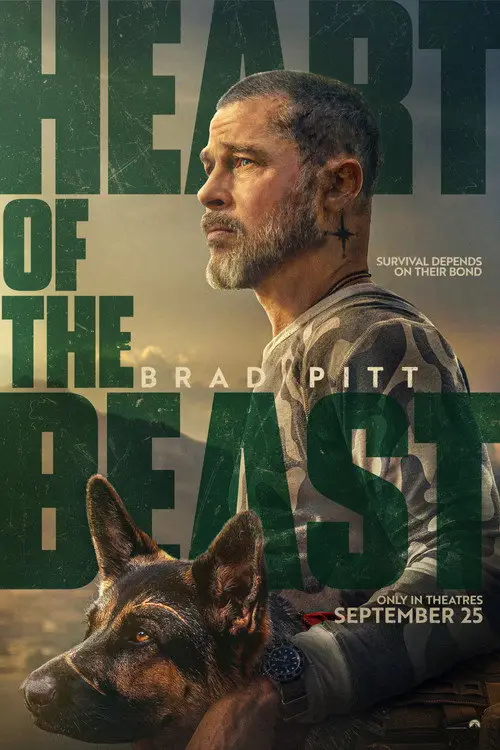
Heart of the Beast
- Opens
Overview: After a harrowing plane crash, Special Forces officer James Belmont and his combat dog, Odin, find themselves stranded deep in the Alaskan wilderness. Together, they are forced into a brutal fight for survival against the elements.
Details
Company Credits
Technical Specs
Summary / Coverage / Press for Heart of the Beast (2026)
Critical Consensus Summary: Heart of the Beast (2026)
Directed by David Ayer, Heart of the Beast stars Brad Pitt as James Belmont, a Special Forces officer stranded in the Alaskan wilderness alongside his combat dog, Odin, following a plane crash. Reviewers generally praise the wilderness survival thriller for its emotional sincerity and intimate focus on the bond between man and dog, even if the narrative offers few major surprises.
Key Reviews & Outlets
-
Frank Scheck (The Hollywood Reporter)Frames the film as a deeply moving love story between a man and his dog, noting that the canine relationship in no way diminishes its emotional payoff.
-
Nick Schager (The Daily Beast)Calls the movie a survivalist adventure that, while not quite Jack London level, will ultimately compel audiences to “reach for the nearest box of Kleenex.”
-
Jim Vejvoda (IGN)Describes it as a gripping wilderness survival film that will appeal heavily to dog lovers and fans of seeing Brad Pitt take a physical beating.
-
Ryan Lattanzio (IndieWire)Highlights the film’s intimate, scaled-down focus as the reason the survival drama succeeds and emotionally lands.
-
Stephen A. Russell (Time Out)Notes that despite David Ayer’s tendency toward “men-with-guns” tropes and combat flashbacks, the film is a gentler, more emotional story made stronger by Mauro Fiore’s cinematography—with the dog Uber stealing the show from Pitt.
-
Alex Harrison (Screen Rant)Applauds Ayer for grounding a simple emotional premise in visceral and sincere filmmaking, culminating in an emotional crescendo that hits hard even if predictable.
-
Giovanni Lago (Next Best Picture)Offers a more mixed perspective, describing it as inoffensive, family-forward storytelling steeped in American iconography that works sporadically despite a formulaic execution.